
What Home Care Is, How It’s Regulated, and Why Families Choose It
It is obvious that due to demanding jobs, busy schedules, and everyday responsibilities, many adults simply don't have the time in a day to be present for an aging parent the way they'd like to. This is not a failure on anyone's part; it's just the reality of modern life. Hence, this is where home care services step in. They offer companionship and support with daily living, right in the comfort of the senior’s own home. Due to this, seniors can age on their own schedule, in their own space, instead of adjusting to someone else's. But there is so much more to know about it, which is why we have this guide that explains what home care actually means, how it's regulated, and why so many families are choosing it today.
Overview: All About Home Care ServicesFamilies across California turn to home care so aging loved ones can receive companionship and daily support without leaving their own home. Every caregiver must clear a DOJ background check and appear on the state's Home Care Aide Registry, and agencies themselves must be licensed by the CDSS Home Care Services Branch. This regulated model gives seniors more independence and families more peace of mind. |
What Is Home Care?
Home care refers to non-medical support services, such as:
- Companionship
- Personal care assistance
- Light housekeeping
- Meal preparation
- Help with daily routines
These are delivered directly in a person's home by a professional caregiver. It's designed to help seniors and individuals with limited mobility maintain independence, dignity, and comfort all without leaving their familiar surroundings.
Signs Your Loved One May Need Home Care
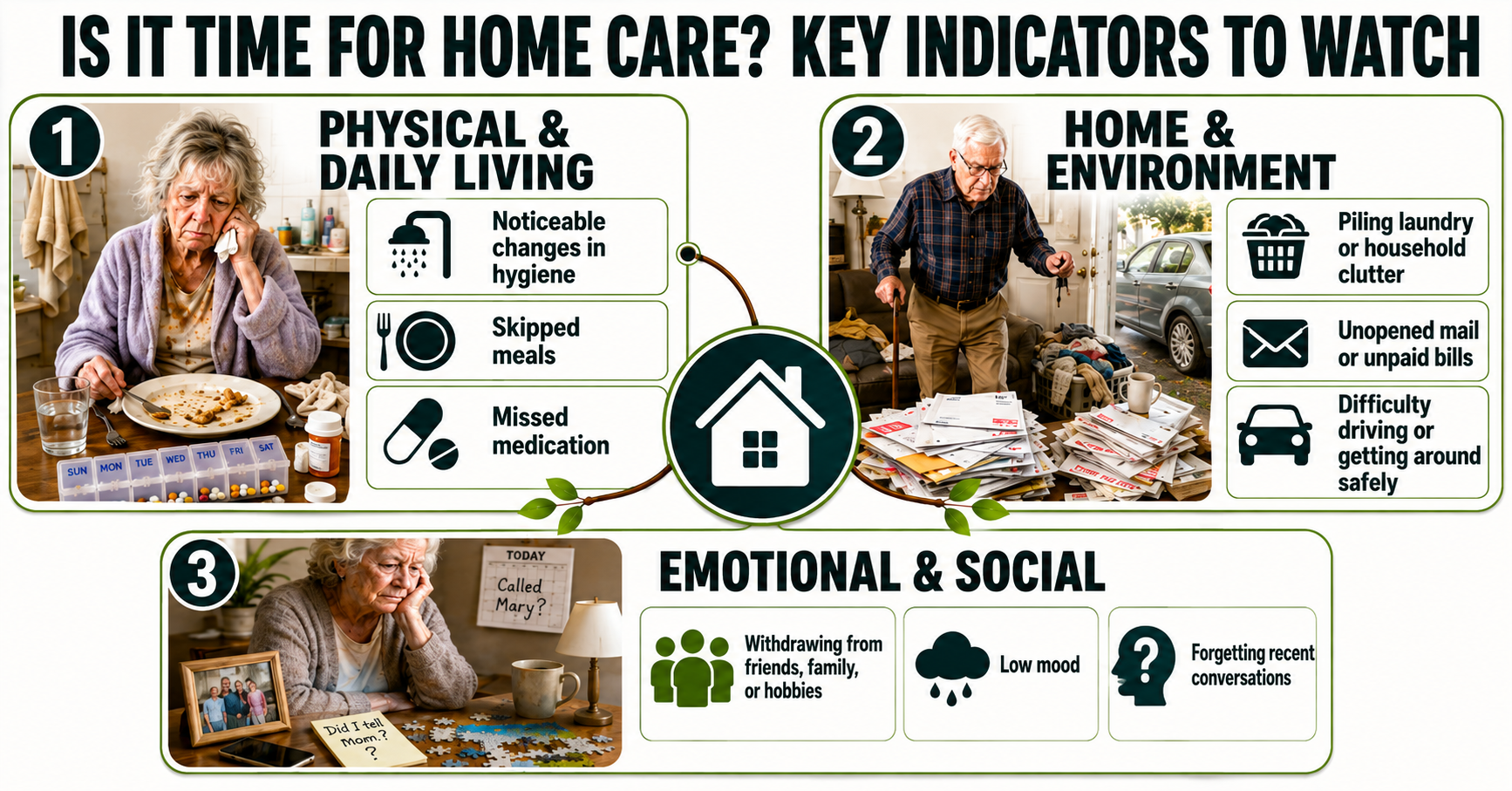
As a family member, you should know that sometimes the signs are subtle, like a little more clutter than usual or a phone call that goes unanswered for a day too long. On their own, these moments can feel easy to explain away, but when a few of them start showing up together, they're often your loved one's way of telling you they could use a little extra support. So, here’s what you need to watch for:
Home Care Regulation in California
Who Regulates Home Care
- CDSS / Home Care Services Branch (HCSB): Licenses the non-medical Home Care Organizations (HCOs) and manages the Home Care Aide Registry.
- Care Provider Management Branch: Handles the criminal background checks for home care aides.
How California Regulates Home Care
- HCO Licensing: Under California's Home Care Services Consumer Protection Act, agencies must be licensed by HCSB before offering non-medical home care.
- Background Checks: Every caregiver must clear a fingerprint and DOJ background check and appear on the state's Home Care Aide Registry.
- Public Registry: Families can verify a caregiver's status directly through the Home Care Aide Registry.
- Ongoing Oversight: CDSS conducts unannounced visits and can fine or revoke licenses for non-compliance.
| Looking for Trusted Home Care Service?
Every caregiver is registered, trained and cleared under California's Home Care Aide Registry, so you can feel confident from day one. |
Why Families Choose Home Care
Comfort of Familiar Surroundings
This is the top reason families choose home care services. Seniors stay in a home filled with their personal memories, routines, and belongings, which often brings them more emotional comfort and stability than an unfamiliar facility environment ever could.
Flexible Scheduling Options
Families can choose anywhere from a few hours a week to more consistent daily support, adapting the schedule as needs change over time without going for any long-term facility commitments.
Personalized, One-on-One Attention
Home care also allows for individualized attention tailored to one person's preferences, pace, and schedule. This is something that's difficult to replicate in group-based or facility-style care settings.
Greater Independence for Seniors
With the right support, seniors can continue making their own daily choices, such as what to eat, what to wear and when to rest, all while still receiving the help they need with certain tasks.
Support With Daily Living Activities
Caregivers also assist in light housekeeping, meal preparation and daily errands. In short, they help manage everyday tasks that can become harder to keep up with independently over time.
Peace of Mind for Families
When the family knows that a trained, background-checked caregiver is present and providing the needed care to their loved ones, they automatically have real reassurance. This is really important when they are away for any reason.
Companionship and Emotional Support
Not many realize but isolation is a real concern for aging adults living alone. Therefore, having a regular caregiver offers meaningful social interaction, conversation, and emotional connection other than just physical assistance.
Conclusion
Therefore, by now you must have understood that home care offers families a safe, regulated, and deeply personal way to support their aging loved ones. If you're also looking for dependable, compassionate non-medical home care, then look no further than Family Ties Home Care. Our team of professional caregivers provide short-term and long-term home care services throughout Los Angeles & Ventura Counties in Southern California.
| Real care isn't one-size-fits-all. So, let's build a home care plan that actually fits your family's life. |
Frequently Asked Questions- About Home Care
How much does non-medical home care typically cost per hour?
Hourly rates vary by location and service type, generally ranging based on caregiver experience, hours needed, and specific tasks requested.
What questions do I need to ask before hiring a caregiver?
You should ask about their background check procedures, training, experience, availability, and how the agency handles scheduling changes or any emergencies.
Do home caregivers assist seniors with specialized conditions?
Yes, non-medical caregivers can offer companionship and daily-living support for conditions like dementia, cancer, stroke, etc., using patient-based, non-clinical approaches suited to each individual.
Which age groups is home care best suited for?
Home care serves adults of any age needing daily support, though it's most commonly used by seniors 65 and older facing mobility or independence challenges.
What happens if my parent refuses to accept a home caregiver?
Generally, agencies often start with short "trial" visits and let seniors ease in gradually, since initial resistance is common and usually fades.
