
Professional Supports Necessary For Recovery at Home After Surgery
Healing after surgery doesn't stop when you leave the hospital, but it continues at home. Every year, over 45 million Americans have surgery, and most of them go home to recover without any nurse or doctor by their side to take care of them. That means millions of people are dealing with pain, limited movement, and medical instructions, mostly on their own, without any help. This is why professional recovery at home after surgery matters, as they provide patients with the help they need to heal safely and comfortably, right where they feel most at ease.
In this blog, we will guide you through everything you need to know about at-home recovery after surgery, like why it matters, and how the right support can make all the difference in your healing process.
Professional Support for a Smoother Recovery
Recovering at home after surgery requires the right professional support. Trained caregivers monitor health, manage wounds, administer medicines, and help patients move safely. They also assist with breathing exercises, track swelling, guide stair use, and record recovery progress. Additionally, they help with recovery devices and daily household tasks, ensuring patients heal comfortably while families stay stress-free.
Why Do You Need Professional Support to Recover at Home After Surgery?
Professional Monitoring for a Smooth Recovery
After your surgery, you may need someone to check on you, so a trained professional will regularly monitor your blood pressure and attend to your everyday needs at home. They can quickly spot early signs of infection or any blood clots, as they can quickly help you to stop these problems from turning into a serious one. Patients going through recovery from heart surgery especially need regular monitoring, as the heart needs careful attention during the healing process.
Managing Wounds and Medicines the Right Way
A professional support can help you change your wound dressings, such as gauze, foam, or waterproof bandages, to keep the wound clean and protected from infection, and for medicines, they remind you when you need to take them, measure the correct dose, and make sure you are not mixing anything that could cause side effects. They ensure that your surgical recovery at home always stays safe and without any hassle, and prevent any mistakes that will slow down your recovery.
Moving Safely with Professional Physical Support
As your after-surgery phase, moving hastily or incorrectly can cause you some serious issues for your recovery. With the help of the professionals, they can help you with walking and with your daily movements while preventing any falls or any strain on your muscles, so that you can easily do your daily activities.
Expert Care Infection Prevention
Many patients are at risk of getting a lung infection after surgery without even realizing it. Professional caregivers help you to prevent this by guiding you through some simple deep breathing exercises that will clear mucus buildup in your lungs, keep your lung tissues healthy, and stop any infection from developing before it gets serious.
Planned Care and Emergency Support
Professional caregivers follow a structured recovery plan to help patients recover well, while they are also watching for any emergencies. They can easily spot the serious early signs, so they can get medical help very easily when it is needed, and make sure the doctors and nurses receive important health updates so that they can make the decision faster.
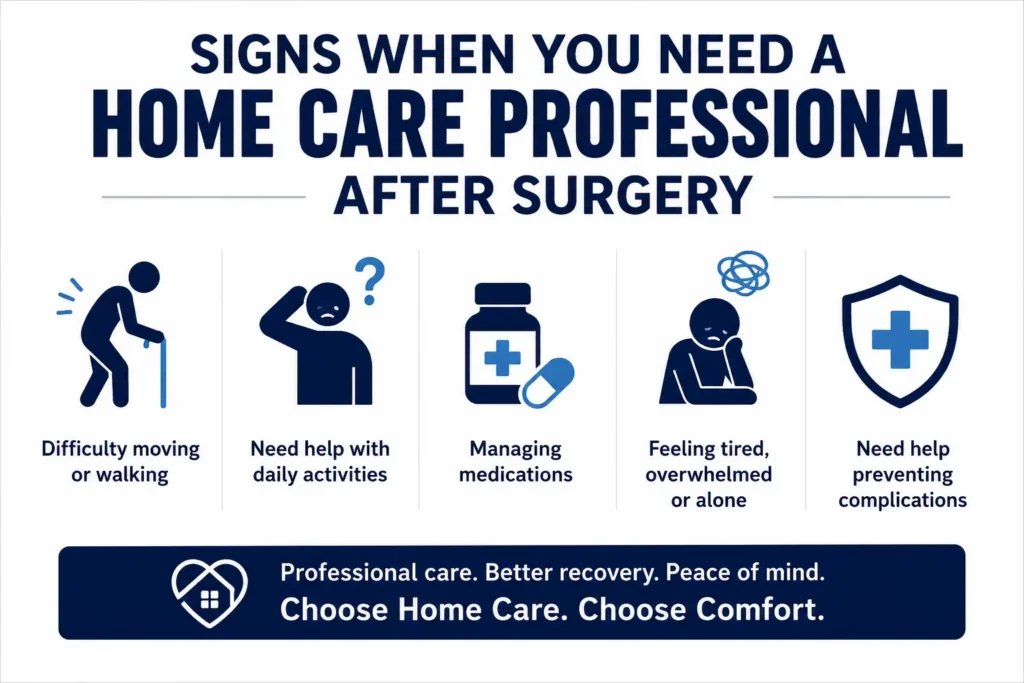
Signs When You Need a Home Care Professional After Surgery
You may need professional home care after surgery if you have trouble moving around safely, cannot manage your medicines on time, have no family support at home, feel weak or dizzy, or notice slow wound healing.
How Home Care Professionals Can Help to Recover After Surgery?
Checking Swelling and Fluid Buildup
Fluid collection around the operated area after the surgery can cause swelling or tightness. In-home recovery support professionals carefully watch changes in your body, and they take notes of any increase or any other changes in your body, and they compare everyday progress. This will help them understand the normal healing process and notice the problems that may need a doctor’s attention quickly.
Mobility and Rehab
Stairs can become a very difficult task to do post-surgery because your leg strength may still be weak. Those professional supporters will help to guide their patients with safe techniques, like proper use of railings, carefully putting their feet on the floor, and taking baby steps while walking. This will help them not to put any type of strain on their feet and will lower the chances of an accidental fall during the recovery.
Preventing Complications
After surgery, many people get problems like blood clots, bed sores, and chest infections that can develop at home. With the help of a professional caregiver, you can move, as they will check your health regularly, and catch early warning signs like fever or swelling before the problem can become a serious issue, and will make your recovery at home a peaceful experience.
Assisting with Recovery Support Devices
After surgery home care professionals help patients to use the recovery equipment properly, such as braces, arm or leg support, or a support belt. They always make sure that the device fits them well, so that it is not too loose or too tight for them. Also, this device helps them to sit properly and doesn't cause any pain or discomfort, or not cutting of their blood flow. They also tell them when to wear it and for how long they have to wear it.
Help with Everyday Household Chores
Home care professionals help patients with their simple daily routine tasks, like folding their clothes, organizing the small things, and tidying up the mess. This will help them to keep the home clean and give easy movement around the house. Beyond physical help, having someone by their side reduces the stress and anxiety that often come with recovering alone. Knowing that support is always there gives patients the comfort and peace of mind to heal better, both physically and emotionally.
Conclusion
With professional care supporters, patients can only focus on healing while their daily needs are taken care of. Family Ties Home Care provides reliable and caring support that is tailored to each patient differently, keeping them comfortable and safe during their recovery. Our Caregivers help patients recover confidently while giving families peace of mind.
FAQ’s on Home Recovery After Surgery
1. How is a professional caregiver different from a family member helping at home?
Unlike family members, professional caregivers are trained to handle post-surgery care, follow doctor's instructions, spot early warning signs, and provide the right medical support when needed.
2. Is professional home care only for elderly patients after surgery?
No. Professional home care is for everyone, not just for elderly people. Anyone who may need any extra help and care while recovering at home after their surgery can benefit from it.
3. Can a home care professional help if unexpected complications arise at home?
Yes, they can help as they are trained especially to know how to spot early warning signs and can quickly get medical help if something goes wrong during recovery.
4. Can home care professionals communicate with my doctor directly?
Yes, these professional caregivers keep your doctor informed about your health progress so that any necessary changes to your recovery plan can be made at the right time.
5. Can a home care professional help with physiotherapy exercises at home?
Yes, many of these home care professionals are trained to help patients do simple exercises suggested by the doctor to slowly regain their strength and movement.
