
How Hospice Care Comfort Improves Peace and Quality of Life
For people facing a serious or life-limiting illness, comfort becomes just as important as medical treatment. At this stage, care is not only about managing symptoms but also about protecting dignity, emotional balance, and everyday peace. That’s why combining effective symptom relief, emotional reassurance, and guidance for families plays such an important role. When these elements come together, they help create a calmer and more supportive experience during a difficult journey.
In this blog, we’ll explore how hospice care comfort improves peace of mind and enhances quality of life for patients and their loved ones.
Hospice Care Comfort SummaryHospice care focuses on improving the quality of life for individuals with life-limiting illnesses by prioritizing relief from physical symptoms, emotional stability, and dignified support. It includes effective pain and symptom management, assistance with daily activities, and consistent emotional reassurance for patients and families. Care is delivered in calm, familiar environments while ensuring clear communication and respect for personal choices. This coordinated approach helps maintain peace, stability, and comfort throughout the end-of-life journey. |
What Is Hospice Care?
Hospice care is a type of healthcare designed for people who are living with a serious, advanced, or life-limiting illness. It is closely related to palliative care, especially in how it focuses on comfort, symptom relief, and emotional support rather than curative treatment.
Medical Eligibility and Timing
In most cases, healthcare professionals recommend hospice care when a person is believed to have a limited life expectancy, often around six months or less if the illness follows its usual progression. However, this estimate is not fixed and may change depending on how the illness develops. Medical teams assess the condition carefully before suggesting this type of care.
Care Settings and Delivery
This form of care can be delivered in different environments based on what suits the patient best. It may be provided at home in hospice facilities, in hospitals, or within long-term care centers. The flexibility of location helps ensure that care remains accessible and aligned with the person’s comfort and situation.
Signs It May Be Time to Consider Hospice Care
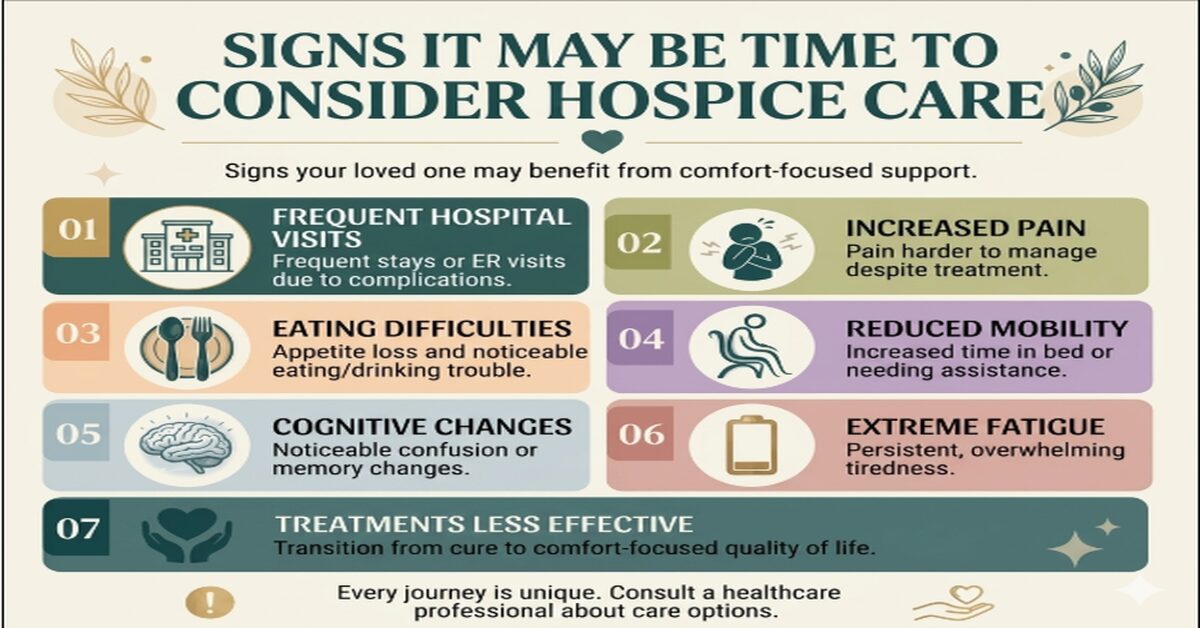 As a serious illness progresses, some signs may suggest it is time to consider hospice care. Understanding these changes can help families make informed decisions focused on comfort and support.
How Hospice Care Comfort Helps With End-of-Life Support?
To support comfort and well-being, hospice care focuses on maintaining quality of life during the final stage of illness. The approach prioritizes:
Emotional and Psychological Support
As an illness progresses, it is natural for patients to feel moments of anxiety, sadness, confusion, or fear. During such times, emotional support plays an important role in bringing comfort and stability. Care is offered through gentle communication, calm reassurance, and a steady, reassuring presence. This kind of support helps ease emotional strain and allows patients to feel more settled and supported as they adjust psychologically to their situation.
Preservation of Dignity in Care
Throughout the care journey, maintaining dignity remains at the heart of every interaction. Personal privacy is respected, and individual preferences and values are thoughtfully included in daily routines and care decisions. Whenever possible, patients are gently encouraged to share their choices, ensuring they feel heard, respected, and involved in their own care in a meaningful way.
Communication and Family Guidance
Clear and compassionate communication is maintained between the care team and the family. Updates about the patient’s condition, any changes, and the expected course of care are shared in a simple and reassuring way. This openness helps reduce uncertainty and supports families in better understanding what to expect, allowing them to feel more prepared and emotionally supported throughout the process.
Environment and Daily Comfort Conditions
The care environment is kept calm, quiet, and stable to promote a sense of peace. Small but thoughtful efforts are made to reduce noise, avoid unnecessary interruptions, and maintain a soothing atmosphere. Whether care is provided at home or in a care facility, the surroundings are gently adjusted to support rest, comfort, and emotional ease during more advanced stages of illness.
Through compassionate, patient-focused hospice care, individuals with life-limiting illnesses receive comfort, dignity, and emotional support during their final stage of life. Care is centered on relieving symptoms, maintaining stability, and supporting both patients and families through calm and respectful guidance. Each care approach is tailored to individual needs, ensuring a peaceful and supportive experience. For trusted and compassionate end-of-life support, Family Ties Home Care LLC provides personalized hospice care services designed to bring comfort, respect, and quality attention. Reach out today to learn more about available care options.
Hospice Care Comfort FAQs on Peace and Quality of Life
Can hospice care be arranged quickly in urgent situations?
In many cases, services can be arranged quickly after evaluation, especially when the patient needs immediate comfort support.
What do I need to arrange before care starts at home?
Families typically prepare a comfortable space, essentials, and provide their medical history for smoother coordination with caregivers.
How do I know if I made the right decision?
Families often feel reassured when they see improved comfort, better symptom control, and supportive communication from the care team.
What safety concerns arise when care is provided at home?
Common concerns include fall risks, limited mobility support, and maintaining a safe, accessible living space.
What information is needed before arranging home-based care?
Medical history, current condition details, and living environment assessment are typically required before setup.
