
Understanding the Right Time for Support & Benefits of Elder Home Care
Knowing when an aging parent or loved one needs extra help can feel confusing. One moment you feel you can do everything, and another moment you feel burdened and fatigued. Many families wait for a crisis, like a fall, hospitalization, or sudden memory changes, before considering support. But is it the right approach? Absolutely not!
Hence, by recognizing the right time to step in and understanding the real benefits of home-based care, you can make informed, compassionate decisions that protect health, dignity, and quality of life. This is exactly what we have detailed in this blog. Explore these signs that indicate when a senior may need help, and if you witness any of these happening around you, it’s time you call for elder home care.
Overview of the Benefits of Elder Home Care
Aging can make daily tasks more challenging, affecting a senior’s independence and safety. Recognizing early signs like mobility issues, forgetfulness, or neglected personal care helps families act in time. The Benefits of Elder Home Care include personalized assistance, improved safety, better nutrition, and emotional support. With compassionate senior caregiver support, elderly care at home ensures comfort, dignity, and continued independence.
How Aging Impacts the Independence of Elders?
Muscle and Joint Changes
It is very common that fat and muscle mass decrease with aging (sarcopenia), which results in
- Lower muscle strength
- Impaired ability to move (mobility)
- Difficulty maintaining balance
- Inability to perform activities of daily living (ADLs).
Additionally, it is common for joints to lose elasticity of cartilage and decrease production of synovial fluid, resulting in osteoarthritis or stiffness in joints. All of these musculoskeletal changes place older adults at higher risk for falls and injuries; therefore, aided supervision and/or mobility aid assistance is very important and calls for you to get elderly care at home.
Mild Cognitive Decline
Certain individuals may have some form of mild cognitive impairment together with normal aging. These people may experience slower processing speed and occasional lapses in short-term memory as well as executive function deficits. These changes in thinking ability will probably not impact day-to-day living in the beginning; over time, however, these will create problems with planning, making decisions, and multitasking. For example, problems may arise in managing the medications they take, remembering who has appointments, and keeping track of their financial status.
Sensory Limitations
With aging, individuals may develop presbyopia (farsightedness), cataracts, and macular degeneration that will impair their vision and thus contribute to the risk of falling during the night. In fact, according to the CDC Older Adult Falls Data, more than 14 million adults aged 65 and older in the United States report a fall each year, and falls are a leading cause of injury among older adults.
In a similar manner, presbycusis (loss of high-frequency hearing) may impair communication, awareness of safety, and social interactions. Since individuals with either of these sensory impairments may be socially isolated from others or less confident in carrying out household chores. With the help of senior caregiver support, they can be assisted in using hearing aids effectively and through visual cues, which will allow them to perform their tasks on their own.
Emotional and Psychological Changes
As humans age, their emotional resilience may deteriorate due to a combination of neurochemical changes and life events like retirement, the death of a loved one, or chronic illness. When basic tasks become physically difficult, seniors may experience increased worry, depressive symptoms, or frustration. These emotional changes frequently worsen cognitive impairments, which results in a vicious cycle that progressively diminishes independence.
Common Signs That a Senior May Need Home Care Support
Below are key indicators with their corresponding benefits:
Difficulty Managing Medications
Signs: Not taking a medication on the day it’s supposed to or taking the wrong medication, and/or having difficulty following a complicated medication schedule.
Benefits of Home Care: Family caregivers provide reminders when to take medications, organize medications in pill boxes, monitor adherence to medication regimens, and/or prevent adverse medication interactions or missed doses, many times unnecessarily increase your risk of hospitalization and ultimately provide for better overall health management.
Challenges with Meal Preparation and Nutrition
Signs: Skipping meals, relying on processed or unhealthy foods, or inability to prepare balanced dishes.
Benefits of Home Care: In-home caregivers provide essential support through meal planning, cooking, and dietary monitoring, which is one of the key in-home care benefits that helps seniors maintain proper nutrition and energy levels and prevents weight loss or malnutrition-related complications.
Unsafe Movement
Signs: Hesitation while walking, difficulty climbing stairs, frequent tripping, or fear of falling.
Benefits of Home Care: Caregivers provide physical support, mobility training, and fall prevention strategies, including assistive devices and environmental modifications, reducing the risk of fractures and injuries.
Neglected Personal Hygiene
Signs: Missing showers, inadequate grooming, or wearing the same clothing repeatedly.
Benefits of Home Care: Assistance with bathing, grooming, and dressing preserves dignity, prevents skin infections, and ensures overall hygiene.
Cognitive or Financial Management Struggles
Signs: Difficulty paying bills, scheduling appointments, or following multi-step tasks.
Benefits of Home Care: Caregivers help organize finances, track appointments, and provide step-by-step guidance for daily tasks, reducing stress, errors, and potential financial mismanagement.
Decreased Socialization
Signs: Avoiding friends or family, loss of interest in hobbies, or reluctance to leave the home.
Benefits of Home Care: Companionship, encouragement for social interaction, and organized activities improve mental health, reduce loneliness, and enhance overall quality of life.
Difficulty Using Household Devices or Technology
Signs: Confusion when using microwaves, phones, or other household appliances creates potential hazards.
Benefits of Home Care: Caregivers provide guidance, supervision, and training to safely operate devices, maintaining independence while minimizing accidents.
Conclusion
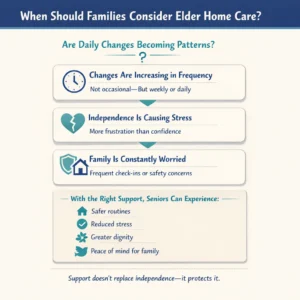
Getting support does not mean losing independence; it means creating a safer, more comfortable way to continue living at home. If you are looking for reliable care for your loved one, Family Ties Home Care is here to help. We understand that every senior has unique needs, and our goal is to provide support that feels respectful, personal, and reassuring. Our companion caregivers make life easier for both seniors and their families. Contact us today to discuss your loved one’s needs and find the right care solution for your family.
FAQs
1. What Services Are Included in Elder Home Care?
Elder home care usually includes companionship, help with daily routines, light housekeeping, meal assistance, medication reminders, and transportation to appointments. Services can be adjusted based on the senior’s individual needs and level of independence.
2. Can Elder Home Care Be Adjusted as Needs Change?
Yes, care plans can be changed if health conditions or daily needs change. Depending on the senior’s physical, emotional, or medical condition, services may grow, shrink, or change their focus.
3. Is Home Care Suitable for Seniors With Chronic Illness?
Home care can support seniors who live with chronic conditions such as arthritis, diabetes, or heart disease. Caregivers help maintain routines, encourage healthy habits, and provide supervision that supports overall stability at home.
4. What Should Families Look for in a Home Care Provider?
Families should look for licensed and insured providers, trained caregivers, clear communication, flexible care plans, and a strong reputation in the community. Trust, reliability, and responsiveness are key factors.