
Complete Guide to Home Care Services: Types of Support, Care Models, and When They’re Needed
When it comes to your ageing or unwell loved one, providing them with every possible amenity becomes a basic goal. However, it requires a well-framed plan to ensure their safety, address health issues, and manage their daily chores. And getting it done without the right guidance can be stressful for families. This is why choosing the right elder home care services, with a well-planned schedule and personalized support, is beneficial.
This guide provides a simplified overview by describing service types, care models, and when each is needed. Once you’re done reading this, you can make solid decisions and develop care plans based on their changing needs.
Key Takeaways
- Understanding the Essence of Home Care
- Identifying Who Benefits from These Services
- Primary Care Services (Categorized by Common Family Needs)
- Support for Daily Safety and Monitoring
- Advanced Assistance for Complex Medical Situations
- Available Care Timelines and Staffing Approaches
- Recognizing the Indicators that it’s Time to Begin
- Navigating the Process of Selecting Your Care Provider
What is Home Care?
Home care is a personalized plan to give in-home support to the needy. The elderly, specially abled individuals, or those recovering from chronic illness can be beneficiaries of this service. It includes companionship and short- or long-term care to ensure safety, comfort, and independence.
What Home Care Typically Does and Does Not Include?
The home care typically includes:
- Providing help with the daily activities like bathing, dressing, grooming, and toileting.
- Providing support while walking helps the person move more easily around the house. Ensuring the safe transfers.
- Helps with cleaning, laundry, cooking, and other household tasks.
- Providing companion care, emotional comfort, and meaningful social interaction.
- Managing grocery runs, errands, rides to doctor visits, and pill reminders.
The home care typically doesn’t include:
- Clinical staff use procedures to treat wounds, give injections, and provide other medical treatments.
- Professional medical help provided by nurses under a doctor's consent.
- Medical tasks like physical therapy or giving meds, that strictly need a licensed professional.
Home Care vs Other Options
| Feature | Home Care | Home Health Care | Assisted Living | Nursing Facilities |
|---|---|---|---|---|
| Primary Focus | Non-medical daily support & companionship | Skilled clinical/medical recovery | Housing with support for daily living | 24/7 intensive medical & personal care |
| Medical Care | None; focuses on tasks like errands & meals | High; includes nursing, PT, and wound care | Limited; medication management & basic aid | Comprehensive, physician-led clinical care |
| Setting | The individual’s private home | The individual’s private home | Residential community (private/shared units) | Clinical/Hospital-like residential facility |
| Independence | High; individual stays in their preferred environment | Moderate; focuses on recovery at home | Moderate; help with tasks like bathing/dressing | Low; residents require constant supervision |
| Social Interaction | High one-on-one time with a caregiver | Low; limited to medical check-ins | High; community events & group activities | Moderate; staff-led social programs |
| Ideal For | Seniors needing help with chores or safety | Those recovering from surgery or injury | Seniors who want community but need daily help | Individuals with chronic, complex medical needs |
Who Home Care Helps Most
-
Aging Adults Staying Independent at Home
Home care helps older adults or patients who need home-based care rather than institutional living. They provide assistance with personal care and mobility, allowing the elderly to proceed at their own comfortable pace.
-
Recovery After Illness or Surgery
The elder ones need more care if they have had a prior illness or surgery. Transferring from the hospital to home can be challenging for the initial days. At this time, a temporary but consistent medication assistance helps the patients to focus entirely on regaining their strength.
-
Chronic Conditions That Impact Daily Living
Dealing with the critical chronic conditions is not easy. It needs the reliable, consistent hand of a professional home care provider. Their thorough skills and work experience help ensure your elder one’s safety. They help manage the symptoms effectively while protecting the independence and dignity that older adults deserve in their own homes.
-
Family Caregivers Who Need Support
Sometimes giving constant care can be physically and emotionally tiring. To prevent this, personalized services offer family members a helping hand. Ensuring they get the independent time with their elderly ones, alongside proper care and companionship.
Core Home Care Services (Grouped by What Families Actually Need Help With)
The older home care services that families must needed includes:
Personal Care (ADLs) - Assistance with Daily Living
- The personal hygiene routines, including bathing, grooming, and toileting, are managed by the home care helpers. Ensuring it’s done safely while maintaining dignity.
- From wheelchair assistance and movement help to fall prevention, it can be easier with a helping hand. This can reduce mobility stress, keeping elder ones safe.
- Incontinence care and toileting assistance tailored to comfort and dignity.
Companion Care
- Offers a warm presence and genuine conversation, which can provide emotional support.
- Boosts mood and keeps the mind sharp through shared games, reading, or favorite hobbies.
- Reducing Isolation is possible by encouraging meaningful interactions that help seniors stay independent and happy at home.
Home Support (IADLs)
- Caregivers take the stress out of healthy eating by handling the grocery shopping and preparing balanced meals that keep your loved one nourished.
- They help keep the home tidy and comfortable by staying on top of laundry and daily chores, ensuring a safe, stress-free living space.
- By offering gentle reminders for medications and daily routines, home health care services help you find peace of mind, knowing everything is staying perfectly on track.
Supervision and Safety Support
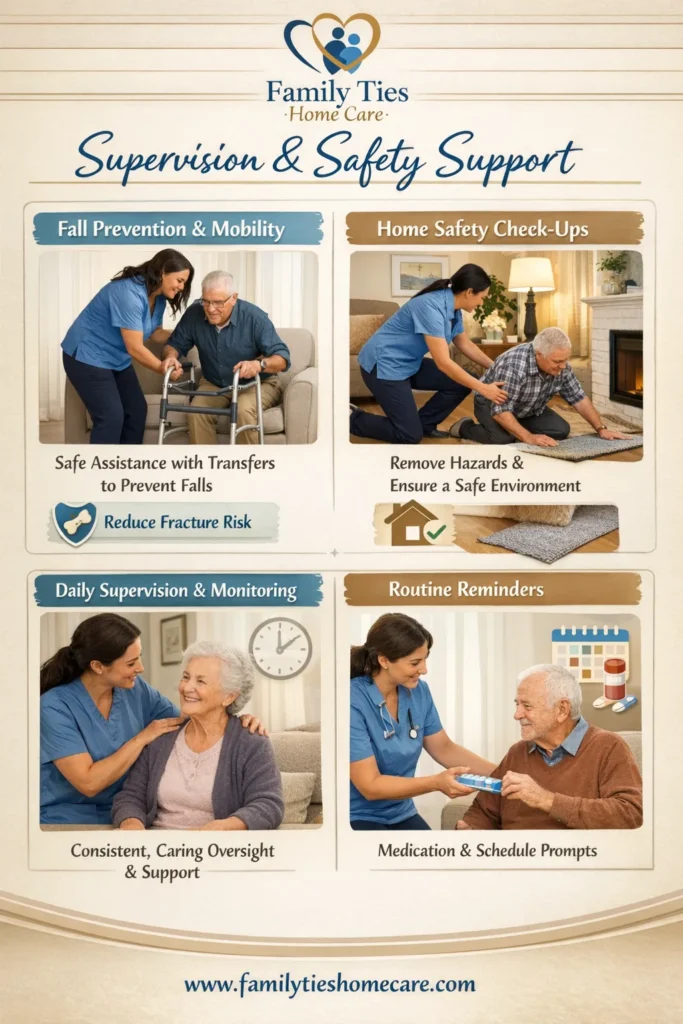
Fall Prevention & Mobility
Falls often lead to injury in seniors, which occurs during “transfers”. Caregivers use proper lifting techniques to ensure they move safely. This proactive support helps reduce the risk of fractures.
Home Safety Check-ups
A professional caregiver keeps a watchful eye on the living space, clearing away tripping hazards and adjusting the layout so the home stays a truly safe haven.
Reassuring Daily Supervision
Sometimes, an unwanted silent medical episode can remain unnoticed for many hours. Having a consistent, caring presence can ease this situation, offering peace of mind to the families and their loved ones.
Staying on Top of Routines
Home care givers offer gentle prompts for medications and daily routines, ensuring important health schedules stay perfectly on track without the stress of remembering everything alone.
Specialized Support for Higher-Need Situations
Dementia and Memory-Related Support
It took real effort to care for and provide support to someone with dementia or memory challenges. A trained caregiver helps reduce stress and sharpen cognitive focus, ensuring emotional reassurance to keep them safe and independent.
Safety and Wandering Risk Basics
Wandering poses serious risks for individuals with memory decline. Caregivers use home modifications, supervision, engaging activities, and alert systems like GPS trackers to prevent accidents.
Chronic Condition Support (Non-Medical)
Energy Conservation and Daily Task Assistance
Professional caregivers break the tasks into manageable steps to conserve energy. They assist patients with bathing, dressing, and preparing lunch. Also, use pacing techniques to prevent fatigue and ensure support for sustained independence.
Comfort and Routine Stabilization
Your older ones needed a stable routine to support consistent health improvement. With consistent routines and personalized care, they can overcome their chronic conditions as early as possible. Following a stable routine helps reduce anxiety and improve sleep. This helps in overall emotional and physical well-being.
Comfort-Focused and End-of-Life Support (Non-Medical)
Dignity, Calm Environment, Family Support Presence
As the elderlys grew older, the level of care must be carefully considered. Elders with serious illness need comfort-focused care. In such services, trained caregivers assist them in managing the pain, ensuring them being safe.
Care Schedules and Coverage Models
A well-structured care schedule helps families to manage their older ones.
Hourly Care
Sometimes, all that's needed is a hand for a few hours. Mostly, caregivers give their services in scheduled hours( from 2 to 12 hours), helping with daily tasks. Ensuring your loved ones get personal care and companionship during these hours.
Overnight Care
For family members who work late nights and those with tight schedules. It is highly recommended to have professional hands for the overnight care of their older ones. They can handle bathroom trips, medication, or any midnight emergencies, ensuring the home stays safe while the world sleeps.
Live-In Care
This setup enables a dedicated caregiver to move into the client’s home. They provide consistent support all day and are available at night, too.
24-Hour Care
The families who need eyes-on support every single minute, this setup works best. With this model, you can get multiple caregivers working in rotating shifts. Ensuring that every need is fulfilled from time to time, as someone is always awake, alert, and ready to help, even in the middle of the night.
Flexible Scheduling and Adjustments
Care isn’t determined on an hourly basis. It has to be well planned to sync all activities without rushing or neglecting any. As each individual's routine varies, the plan has to be kept flexible. This flexible schedule enables your loved ones to manage their health or personal preferences.
How to Know It’s Time to Start Home Care
Elder home care should be considered when it hampers the independence & safety of your loved ones.
Daily Living and Safety Signs
- Difficulty bathing, dressing, or preparing meals signals loss of independence and rising risk in everyday life.
- Repeated falls, balance issues, or trouble walking indicate safety hazards that may require professional assistance.
- Ignoring personal care, skipping meals, or unexplained weight changes reflect challenges with daily living needs.
Cognitive and Emotional Signs
- Persistent forgetfulness, trouble with familiar tasks, or disorientation may compromise safety and signal cognitive decline.
- Missing doses, taking incorrect medicines, or forgetting appointments can lead to serious health risks.
- Increased irritability, anxiety, depression, or social isolation may reflect emotional strain or unmet care needs.
Caregiver Strain Signs
- Feeling constantly tired, overwhelmed, or unable to rest affects caregivers’ health and care quality.
- Irritability, mood swings, sadness, or loss of interest in one's own life reflect rising caregiver stress.
- Skipping your own medical appointments, poor sleep, or weight changes signal physical strain from caregiving.
- Difficulty balancing caregiving with job, family, or social life shows the need for support.
How to Choose the Right Home Care Setup
What to Clarify Before Starting
Goals, Boundaries, and Preferences
Firstly, you have to define what type of care you want to achieve. Check if your older ones can cope with those services. Think about their routines and any cultural or communication preferences, and ensure your loved ones get the proper amenities they need. Clear goals help tailor a care plan.
Schedule Fit and Coverage Needs
Be specific while deciding which help is necessary. To start with, you must know how many hours, days, or months you need the professional's help. Also include whether it requires emergency situations, weekends, nighttime, or 24 hours. Your mind must be clear about all this so you can be upfront with providers and avoid any gaps.
Questions Families Should Ask Any Provider
- What types of services do you offer?
- Are caregivers licensed, vetted, and insured?
- How do you match caregivers to clients?
- Are there any ways to handle emergencies, or do you provide backup coverage?
How to Review Fit After Care Starts
Initial Trial Adjustments Review
For the first month, see the plan as a trial. This is the time to check the preferences so you can tweak any schedules or tasks.
Ongoing Periodic Assessments
A care plan can’t always be constant. So you have to reevaluate it within 3-6 months or right after a hospital visit. As health shifts, so must your care plan.
Watch for Red Flags or Comfort Issues
It is very important to see if your loved ones have been treated with everything they want from the care service. Check for the factors such as punctuality, communication, and handling of safety issues. If your caregiver service is following all of these, and your older one feels comfortable. If not, then it must be looked into.
Summary Checklist
Match needs to service type
Each service (ADL support, skilled nursing, companionship) must align with medical, personal, and social needs. These services, when matched with the right support ensures safe and condition-specific care.
Match service type to schedule model
It is very important to select the right schedules based on your needs. Whether it’s for 1 hour or 24 hours, it must ensure continuous support and comprehensive coverage of health needs.
Reassess as needs change
The changing health pattern requires a service that manages it. It is essential to review and revise the plan or schedule as per the demands.
Conclusion
Now, as you have gone through the whole blog, you must have understood how these well-structured types of support and care models help you entrust home health care services. We at Family Ties Home Care build trust by providing the services and care models that best suit our clients. So, if your elder or loved ones need a companion to go through this journey, we are here to help.
FAQs
1. What exactly does non-medical home care include and exclude?
It includes daily assistance with companionship; however, licensed clinical treatments were excluded.
2. How are caregivers selected, trained, and supervised?
With quality, safety, and reliability as basic goals, reliable caregivers have been equipped with proper screening, training, and regular monitoring.
3. How quickly can home care start in urgent situations?
Depending on availability and urgency, many service providers can arrange care within a day or two.
4. How does home care support family members and prevent caregiver burnout?
It breaks down daily activities as per the plan. This ensures family members rest, work-life balance, and focus on emotional connection.
5. What are the most common reasons home care arrangements fail?
Generally, when it’s difficult to serve the client’s expectations, poor communication and lack of flexibility lead to failure.
